Dividend Taxes by Country: Why the Same Payout Can Mean Different Things
Dividend taxes vary by country, account type, company location, withholding rules, and tax treaties. Here is the global view.

Why Dividend Tax Rules Are Not Universal
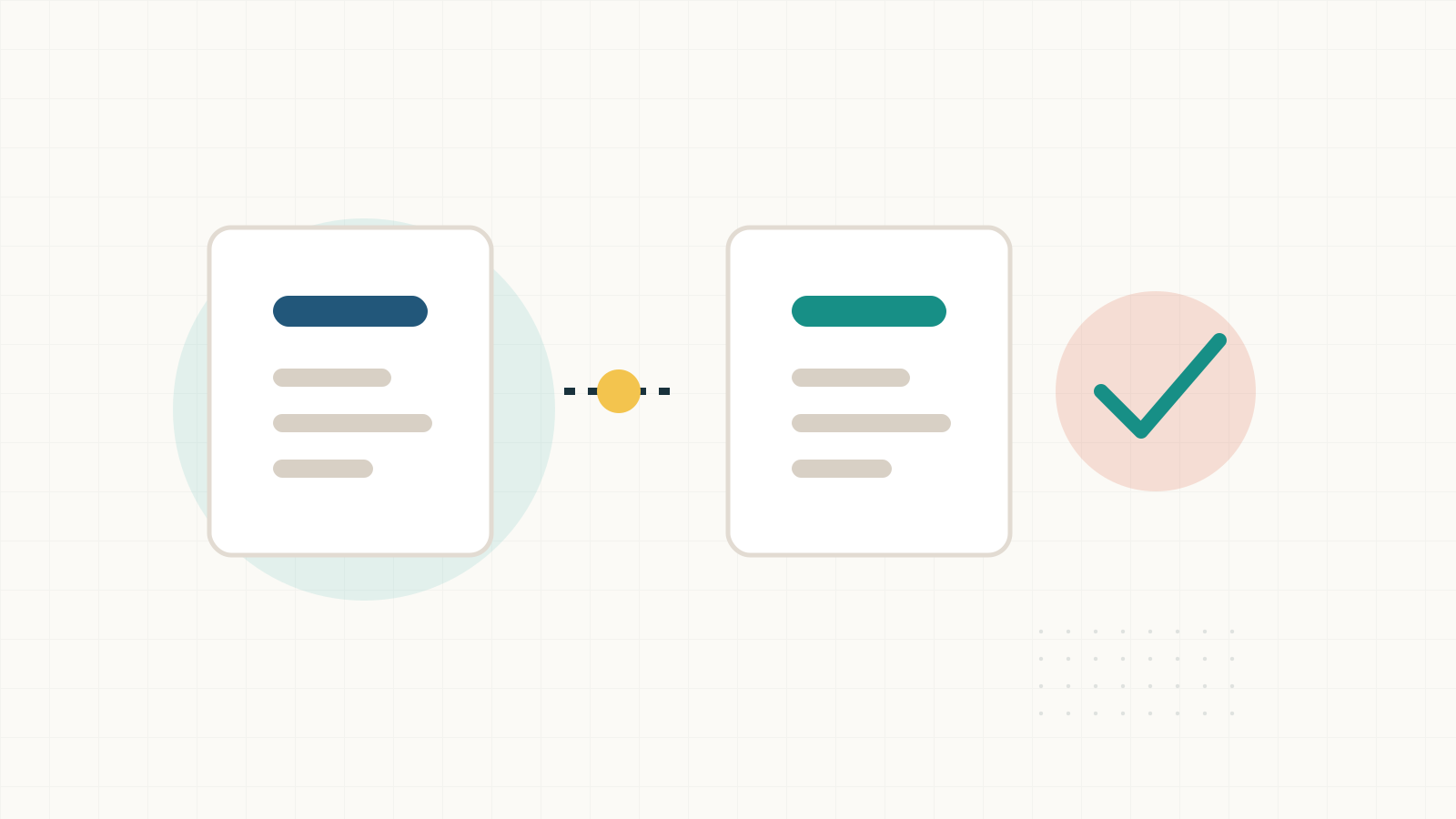
A dividend is simple at the company level: a business distributes part of its profits to shareholders. Tax treatment is not simple. The same dividend can be treated differently depending on where the investor lives, where the company is based, where the shares are listed, what type of account holds the investment, and whether a tax treaty applies.
That matters because the headline dividend is not always the amount an investor keeps. Some countries tax dividends when they are paid. Some apply withholding tax before the money reaches the investor. Some offer tax credits, allowances, reduced rates, or special treatment inside certain investment accounts. Some treat domestic and foreign dividends differently.
The main guide to dividends explains what dividends are and how they work as investor payouts. This article focuses on the global tax idea: dividend income is real income, but local rules decide how it is reported and taxed.
The Basic Global Pattern
Most tax systems care about three questions.
First, who paid the dividend? A domestic company, foreign company, fund, property trust, partnership, or other structure may produce different tax treatment.
Second, who received it? Tax residency matters. A Romanian resident, German resident, Canadian resident, Singapore resident, or Brazilian resident may face different rules even if they own the same international stock.
Third, where was it held? A taxable brokerage account may be treated differently from a pension account, retirement account, investment savings account, or other tax-advantaged wrapper.
This is why dividend tax articles should not assume one form, one rate, or one reporting system.
Domestic vs Foreign Dividends
Domestic dividends are paid by companies in the investor’s own tax jurisdiction. Foreign dividends are paid by companies based elsewhere. Foreign dividends can involve withholding tax in the company’s country before the investor’s local tax system even applies.
Tax treaties can reduce or coordinate some cross-border tax outcomes. The OECD tax treaties overview is a useful starting point for understanding why countries negotiate rules to reduce double taxation and clarify taxing rights. But treaty benefits are not automatic in every case. Brokers, forms, residency, account type, and local procedures can all matter.
For a global reader, the practical rule is simple: before buying dividend stocks across borders, understand the withholding-tax path.
Ordinary, Qualified, Franked, and Other Labels
Different countries use different labels. Some systems distinguish between ordinary dividends and dividends that receive lower rates. Some use dividend tax credits. Some have franking credits. Some have allowances. Some tax dividends together with other capital income. Others apply withholding at source and then reconcile later.
The words can be misleading if copied from another country’s tax system. A term that matters in one jurisdiction may not exist in another. That is why investors should rely on local tax authority guidance, broker tax reports, and qualified local advice rather than assuming terminology from international articles applies directly.
Reinvested Dividends Can Still Matter
Dividend reinvestment does not necessarily erase tax treatment. If a dividend is paid and automatically used to buy more shares, many tax systems still treat the dividend as income received before reinvestment. The details vary, but the core principle is worth remembering: reinvestment changes what happens to the cash, not always whether the dividend counts for tax purposes.
This is especially important for long-term investors using automatic reinvestment plans. Many small reinvestments can also create cost-basis tracking issues when shares are eventually sold.
What Investors Should Check Locally
Before relying on dividend income, check whether your country taxes dividends differently from salary, interest, capital gains, or business income.
Check whether foreign withholding tax applies. Check whether your broker handles treaty relief automatically or requires documentation. Check whether your account type changes the timing or rate of tax. Check whether funds, property trusts, or accumulating share classes are treated differently from ordinary company shares.
Also check whether dividend income affects social contributions, surtaxes, benefit eligibility, or other local rules. In some places, investment income can interact with more than just income tax.
Final Takeaway
Dividend tax treatment is local. The investment idea may be global, but the after-tax result depends on where you live, where the company is based, how the dividend is classified, and what account holds the investment.
For a global personal-finance reader, the safest framing is this: understand dividends before tax, then understand your local after-tax reality. A dividend strategy that looks attractive in one country may be less attractive in another once withholding taxes, reporting rules, and account structures are included.
Sources: OECD tax treaties overview, Investor.gov dividend definition, FINRA stocks guide