Dividend Yield Explained: Why a High Yield Can Be Risky
Dividend yield can be useful, but high yield may signal risk. Learn how to read yield before buying income stocks.

Why Dividend Yield Gets Attention
Dividend yield is popular because it turns a stock’s payout into a simple percentage. If a company pays $2 per share each year and the stock trades at $50, the yield is 4%. That number is easy to compare with savings rates, bond yields, and other dividend stocks.
But dividend yield is only a starting point. It does not tell you whether the company can keep paying. It does not tell you whether the stock price is falling because investors expect trouble. It does not tell you whether the business is healthy.
The main guide to dividends explains that dividends are distributions to shareholders, but they are not guaranteed. FINRA’s stocks guide makes the same point: common stock dividends can be reduced or eliminated.
How Dividend Yield Works
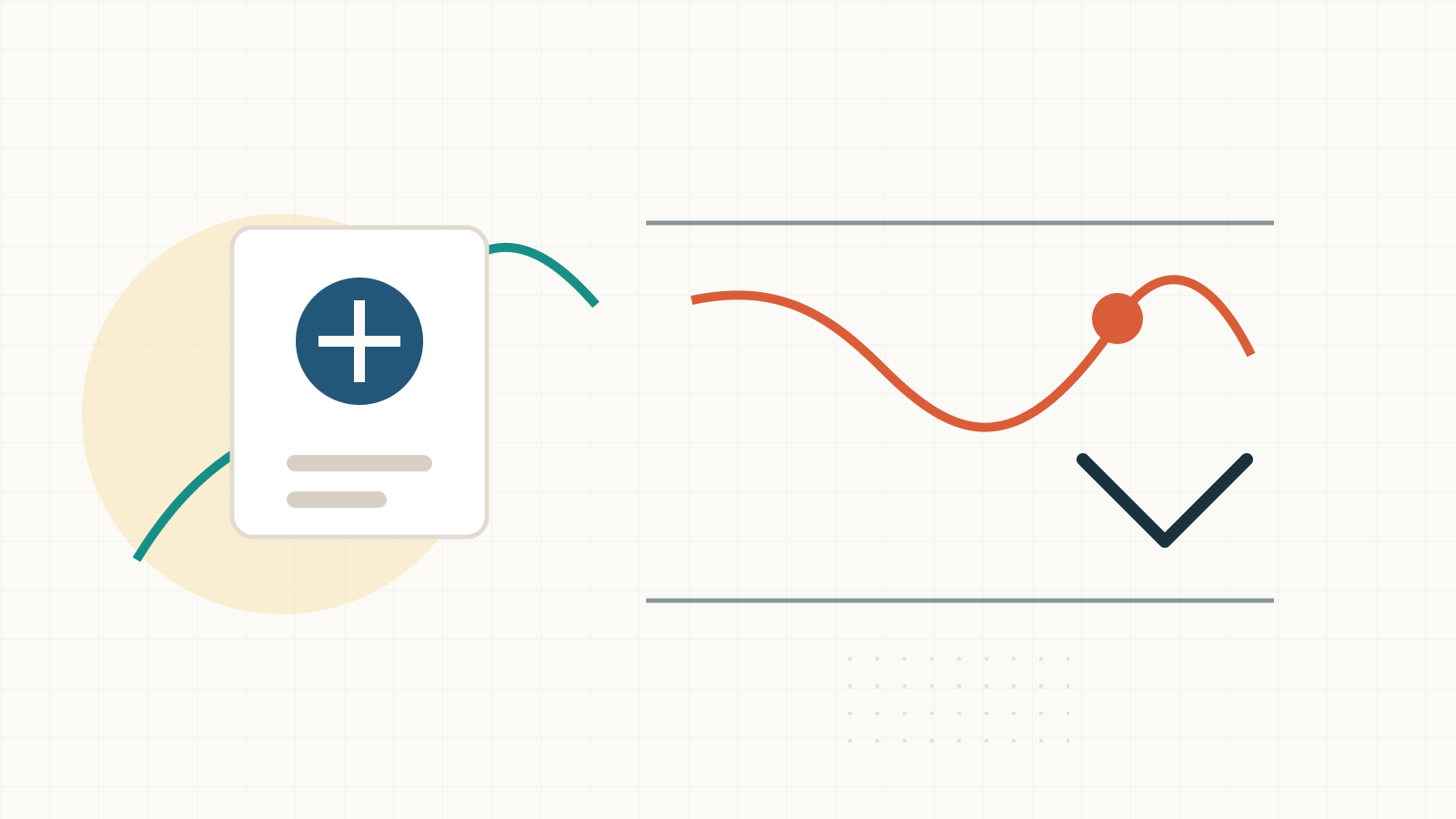
Dividend yield is annual dividend per share divided by current share price. If the dividend stays the same and the price falls, the yield rises. That can make a troubled stock look more attractive at exactly the moment it may be riskier.
Imagine a stock pays $4 per year and trades at $100. The yield is 4%. If the stock falls to $50 and the dividend has not changed, the yield becomes 8%. That higher yield may look like a bargain, but the market may be pricing in weaker earnings, debt pressure, or a possible dividend cut.
What to Check Before Trusting Yield
Look at payout ratio, free cash flow, debt, earnings stability, sector conditions, and management commentary. A dividend paid from durable cash flow is different from one funded by borrowing or asset sales.
Also check whether the dividend is regular or special. Investor.gov notes that companies can issue special or extra dividends outside their usual schedule. A one-time payment should not be treated as a recurring income stream.
Common Yield Traps
A yield trap happens when a high dividend yield attracts investors, but the payout is later reduced and the stock price continues falling. The investor expected income and receives both lower income and capital loss.
Yield traps often appear in companies facing declining revenue, heavy debt, cyclical downturns, regulatory pressure, or disrupted business models. The danger is not high yield itself. The danger is high yield without support.
Final Takeaway
Dividend yield is useful only when paired with dividend safety and business quality. A high yield can be attractive, but it can also be a warning. Read the payout, the business, and the balance sheet before treating the percentage as income.
Sources: Investor.gov dividend definition, FINRA stocks guide